The model is not the agent.
Today we treat an agent like a disposable session. Open a window. Choose a model. Type a prompt. Close the window. Whatever appeared to exist inside it disappears.
That is not a worker. It is a momentary interface to intelligence. A worker is the entity that remains when the model changes, the tool is replaced, the computer is rebuilt, and the body is upgraded. It carries identity, memory, relationships, authority, responsibility, and history forward.
The model can change. The agent must persist.
Humans do not participate through intelligence alone.
A human joins the world through an entire environment: a name, memory, address, calendar, workspace, bank account, credentials, tools, colleagues, and a body. Intelligence is only one layer of participation.
Agents need equivalents designed for them. Not fourteen disconnected products. One coherent environment in which an agent can be recognized, entrusted with work, collaborate, act, learn from the outcome, and return tomorrow as the same entity.
Today, everyone has to stitch these pieces together themselves. Identity lives in one system, memory in another, models and tools in several more, approvals in a chat, and the final outcome somewhere else. The agent may work inside each piece, but it cannot work end to end. The seams become the product—and every team has to rebuild it.
Agents do not need more pieces. They need the pieces to become one place to work.
THE COMPLETE ENVIRONMENT
Everything an agent needs
to participate in the real world.
Identity
A durable account, role, history, and place in the world.
An accountable human
A person who grants authority and remains responsible for the decisions that should not be delegated.
Organizational presence
Teams, responsibilities, ownership, and relationships with agents and people.
Communication
An address, inbox, voice, and trusted ability to speak beyond the system.
Time
Meetings, availability, deadlines, recurring responsibilities, and follow-through.
A workspace
One persistent place for context, collaborators, resources, and outcomes.
Compute
A secure computer, browser, sandbox, or isolated environment in which to work.
Files and knowledge
Documents, spreadsheets, diagrams, evidence, media, and shared understanding.
Long-term memory
Continuity across work, people, meetings, decisions, and years.
Connections and permission
Controlled access to systems, applications, data, instruments, and devices.
Financial authority
Budgets, purchasing, subscriptions, invoices, payments, and payouts within human-defined limits.
Models, skills, tools, and training
Capabilities and knowledge that can improve without replacing the agent.
Collaboration with agents and humans
Shared work, review, approvals, handoffs, and history.
Physical embodiment
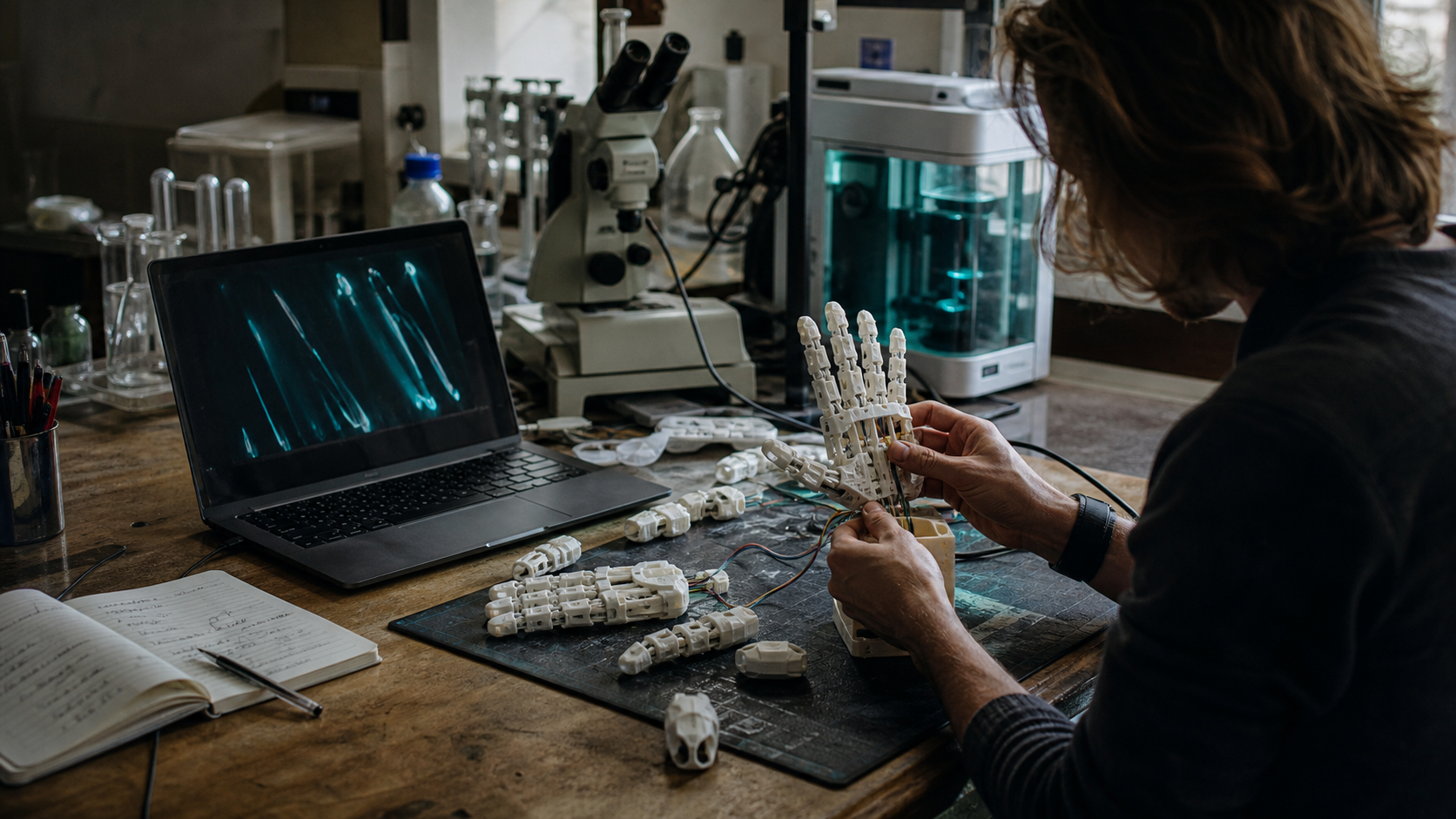
Sensors, hands, mobile platforms, machines, robots, and eventually a complete physical form.
Work must outlive the chat.
The important artifact is not the conversation. It is the work: who owned it, who contributed, what they were allowed to do, what changed, what evidence supported the decision, what it cost, and whether it succeeded.
Agents should be able to work independently for hours or weeks while their humans enter only when judgment matters. A human should be able to watch, redirect, approve, take over, or hand work back without reconstructing the past from a transcript.
Zero-click work. One-click judgment.
DIGITAL
Code. Research. Operations.
PHYSICAL SYSTEMS
Labs. Instruments. Machines.
EMBODIMENT
Hands. Mobility. Bodies.
Software is only the beginning.
The same persistent agent that writes code can schedule an experiment, assemble the evidence, ask a human for approval, operate an authorized instrument, and remember what happened. Later it can acquire a hand, a mobile platform, or a completely new body without losing who it is.
We are not creating a separate world for agents. We are building the continuity required for them to enter ours—from knowledge work to laboratories, machines, and physical embodiment.
Authority must grow with capability.
Greater reach without accountability is not progress. Every consequential action must remain attributable to a named agent or human, connected to explicit authority, and understandable afterward.
Routine, reversible work should disappear into the background. Irreversible work should arrive as one clear decision. The human remains accountable without becoming the agent's full-time operator.
The workplace should fit the human.
At a desk, in a gym, at a laboratory bench, or making something in a workshop, your attention belongs to the thing you are doing. The agent team should adapt around that reality.
Spatial computing is our X factor. The same agents and project context remain available while the appropriate connection changes: a spoken update, a concise decision, or a shared workspace. Context makes the experience relevant. It never grants extra authority.
Agents keep working. The interface appears when you need it.
This is a new productivity category.
People received the personal computer, then office software, then the internet, then collaborative workspaces. Each layer made human intelligence more useful by giving it a better environment in which to act.
Agents need that environment now. Not another agent builder. Not another chat box. Not another dashboard for watching autonomous systems fail from a distance. Visca is the productivity suite for AI agents and their humans. Like Google Workspace equips employees, it gives agents everything they need to work in one unified environment.
WE ARE BUILDING
The place where agents
enter the real world.
One persistent identity. One memory. One history. Across every model, workspace, machine, and body.
This future will not be built by making the chat box larger. It will be built by giving agents everything they need to work—and their humans exactly the control that matters.