Visca

Platform engineering

Buy the one self-hosted ecosystem instead of stitching the stack yourself for three years.

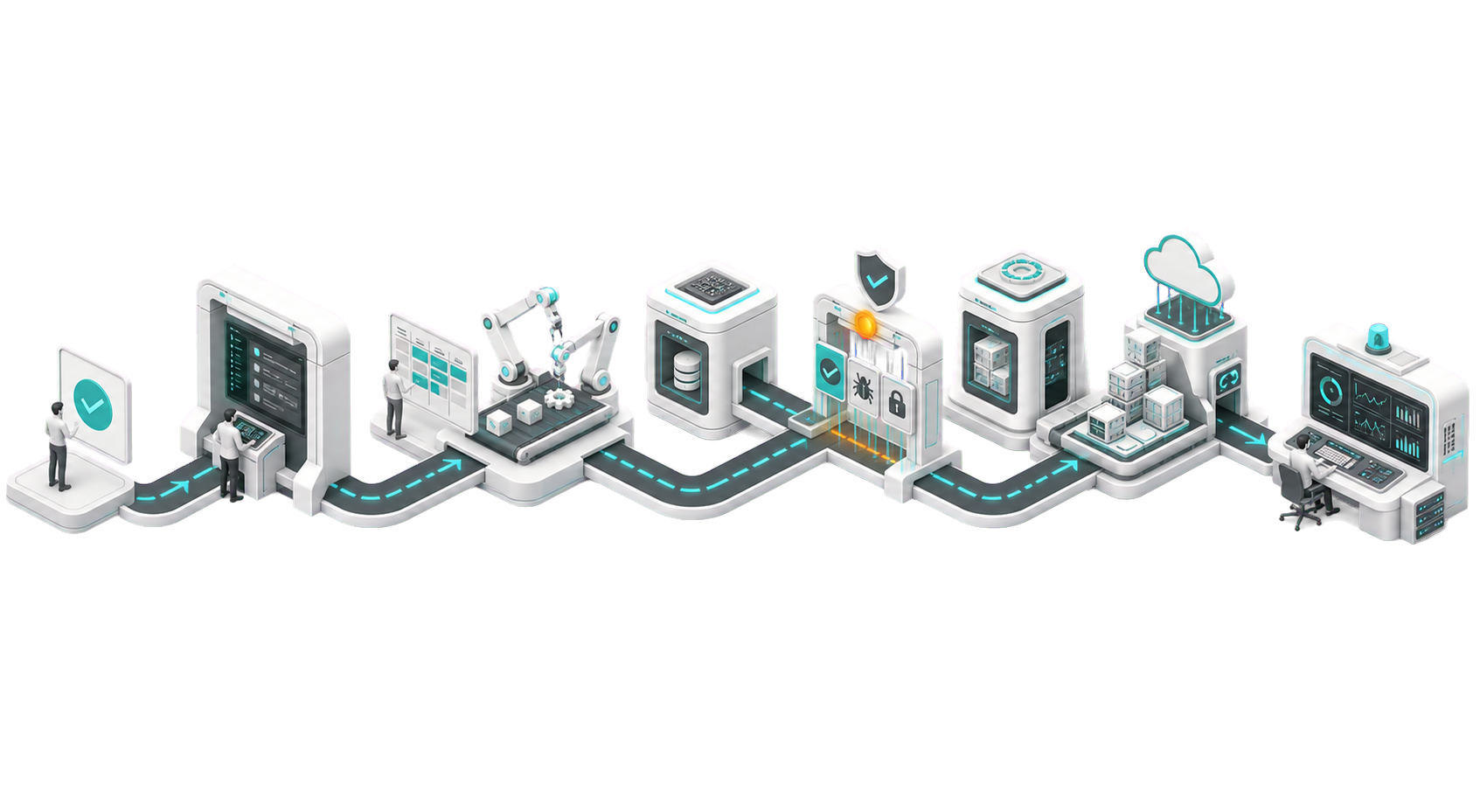
You're the team that has to make autonomy safe to ship inside your own walls — self-service for application teams, guardrails by default, one operational surface instead of a different open-source project and vendor per agent type. Self-hosting is mandatory; stitching a dozen of them into one coherent stack, then owning the seams forever, is the project you'd otherwise spend three years on. Visca is that whole stack as one ecosystem — one identity model, one audit, one developer surface — bought, not built.

Why the data can't leave

Hosted AI is out. A stitched stack is the only thing left — and it breaks here.

A different stack per agent type

Voice agents, coding agents, document agents, and robots each arrive with their own identity, logging, and deployment model. You become the integration tax.

Guardrails as tribal knowledge

Every team reinvents budgets, fallbacks, and access policy in application code. Consistency is a wiki page nobody reads.

No single answer to leadership's questions

'How many agents are in production, what can they touch, what have they done' — there's no dashboard, because there's no shared substrate.

One ecosystem, not a stitched stack

One self-hosted ecosystem, applied to platform engineering.

Cast

The estate as code

Agents, integrations, fleets, and policies declared in one plan. Self-service for teams, guardrails enforced by the substrate, drift detected automatically.

Praxis

One developer surface

One CLI, one set of SDKs, one set of primitives — from laptop to production — across every agent category. The integration tax goes to zero.

Sigil

One identity model

Every actor in the estate, regardless of type, carries the same shape of identity. One revocation path, one lineage model.

Chronicle

One operational record

The dashboard leadership asks for: every agent, everything it can touch, everything it has done — one queryable, tamper-evident substrate.

What you get

Outcomes.

In practice

Onboarding a new agent category

A product team wants to ship a voice agent. Instead of a new identity provider, a new logging pipeline, and a new deployment system, they declare it in Cast, build it through Praxis, and it inherits Sigil identity, Warrant access, and Chronicle audit for free. Platform engineering reviews one plan diff, not a new stack.

Other roles

The whole stack. Self-hosted. One ecosystem.

The entire agent stack, inside your own walls.

Models, identity, tools, voice, payments, runtime, and audit — as one integrated ecosystem, self-hosted, sovereign, air-gapped. Nothing stitched from vendors. Nothing leaves your perimeter. Open at the core. No license rug-pulls, ever.